Re: [Air-L] Meme Tracking

Hi all If we are interested in studying what people are doing on the Internet (what they think they're doing etc.), then we can't ignore that people share images -especially images with words in -that they call memes. The books coming out of the Why We Post project take this line and are rewarded with all sorts of insights about the contemporary use of memes in various cultures. E.g. https://www.ucl.ac.uk/why-we-post/discoveries/14-memes-have-become-the-moral... Miller and Sinanan's book about Facebook use is a good place to start Miller, D. & Sinanan, J. (2017). Visualising Facebook. London: UCL Press. http://www.ucl.ac.uk/ucl-press/browse-books/visualising-facebook If we're interested in the relationship between Dawkins' ideas and the concept of an internet meme, I have a couple of pointers that might help. It seems to be that media scholars use the term meme to study how content spreads across the Internet, by focusing on the content of the content -virality, while virality is a metaphor -people do the spreading, not the content. For Dawkins (in the meme) "the idea of purpose is only a metaphor" (The Selfish Gene). When Godwin introduced the Internet meme idea, he seemed to be taking this concept of virality in order to introduce a counter-meme (Godwin's Law of Nazi Analogies). In this case, the meme's purpose is Godwin's purpose. https://www.wired.com/1994/10/godwin-if-2/ Many definitions of meme emphasise humour e.g. “a piece of culture, typically a joke, which gains influence through online transmission.” Davison, P. (2012). The Language of Internet Memes. In M. Mandiberg (ed.), The Social Media Reader (pp. 120–34), New York: New York University Press If we lose our sense of humour while studying or discussing memes, we will not be able to understand them at all. Probably best not to underestimate the role of humour in any communications, but especially online. Hope this helps. -Ella Dr Ella Taylor-Smith School of Computing Edinburgh Napier University 10 Colinton Road Edinburgh, EH10 5DT Email: e.taylor-smith@napier.ac.uk http://www.iidi.napier.ac.uk/e.taylor-smith http://about.me/EllaTaylorSmith @EllaTasm This message and its attachment(s) are intended for the addressee(s) only and should not be read, copied, disclosed, forwarded or relied upon by any person other than the intended addressee(s) without the permission of the sender. If you are not the intended addressee you must not take any action based on this message and its attachment(s) nor must you copy or show them to anyone. Please respond to the sender and ensure that this message and its attachment(s) are deleted. It is your responsibility to ensure that this message and its attachment(s) are scanned for viruses or other defects. Edinburgh Napier University does not accept liability for any loss or damage which may result from this message or its attachment(s), or for errors or omissions arising after it was sent. Email is not a secure medium. Emails entering Edinburgh Napier University's system are subject to routine monitoring and filtering by Edinburgh Napier University. Edinburgh Napier University is a registered Scottish charity. Registration number SC018373

Really, I think this is the final word on the subject: http://bit.ly/4kb77v Best, Tof Eklund English and New Media Studies Auckland University of Technology On Jun 12, 2017, at 8:54 PM, Taylor-Smith, Ella <E.Taylor-Smith@napier.ac.uk<mailto:E.Taylor-Smith@napier.ac.uk>> wrote: Hi all If we are interested in studying what people are doing on the Internet (what they think they're doing etc.), then we can't ignore that people share images -especially images with words in -that they call memes. The books coming out of the Why We Post project take this line and are rewarded with all sorts of insights about the contemporary use of memes in various cultures. E.g. https://www.ucl.ac.uk/why-we-post/discoveries/14-memes-have-become-the-moral... Miller and Sinanan's book about Facebook use is a good place to start Miller, D. & Sinanan, J. (2017). Visualising Facebook. London: UCL Press. http://www.ucl.ac.uk/ucl-press/browse-books/visualising-facebook If we're interested in the relationship between Dawkins' ideas and the concept of an internet meme, I have a couple of pointers that might help. It seems to be that media scholars use the term meme to study how content spreads across the Internet, by focusing on the content of the content -virality, while virality is a metaphor -people do the spreading, not the content. For Dawkins (in the meme) "the idea of purpose is only a metaphor" (The Selfish Gene). When Godwin introduced the Internet meme idea, he seemed to be taking this concept of virality in order to introduce a counter-meme (Godwin's Law of Nazi Analogies). In this case, the meme's purpose is Godwin's purpose. https://www.wired.com/1994/10/godwin-if-2/ Many definitions of meme emphasise humour e.g. “a piece of culture, typically a joke, which gains influence through online transmission.” Davison, P. (2012). The Language of Internet Memes. In M. Mandiberg (ed.), The Social Media Reader (pp. 120–34), New York: New York University Press If we lose our sense of humour while studying or discussing memes, we will not be able to understand them at all. Probably best not to underestimate the role of humour in any communications, but especially online. Hope this helps. -Ella Dr Ella Taylor-Smith School of Computing Edinburgh Napier University 10 Colinton Road Edinburgh, EH10 5DT Email: e.taylor-smith@napier.ac.uk<mailto:e.taylor-smith@napier.ac.uk> http://www.iidi.napier.ac.uk/e.taylor-smith http://about.me/EllaTaylorSmith @EllaTasm This message and its attachment(s) are intended for the addressee(s) only and should not be read, copied, disclosed, forwarded or relied upon by any person other than the intended addressee(s) without the permission of the sender. If you are not the intended addressee you must not take any action based on this message and its attachment(s) nor must you copy or show them to anyone. Please respond to the sender and ensure that this message and its attachment(s) are deleted. It is your responsibility to ensure that this message and its attachment(s) are scanned for viruses or other defects. Edinburgh Napier University does not accept liability for any loss or damage which may result from this message or its attachment(s), or for errors or omissions arising after it was sent. Email is not a secure medium. Emails entering Edinburgh Napier University's system are subject to routine monitoring and filtering by Edinburgh Napier University. Edinburgh Napier University is a registered Scottish charity. Registration number SC018373 _______________________________________________ The Air-L@listserv.aoir.org<mailto:Air-L@listserv.aoir.org> mailing list is provided by the Association of Internet Researchers http://aoir.org Subscribe, change options or unsubscribe at: http://listserv.aoir.org/listinfo.cgi/air-l-aoir.org Join the Association of Internet Researchers: http://www.aoir.org/

See attached. Cheers. On 12 Jun 2017 11:27, "Tof Eklund" <tof.eklund@aut.ac.nz> wrote:
Really, I think this is the final word on the subject: http://bit.ly/4kb77v
Best, Tof Eklund English and New Media Studies Auckland University of Technology
On Jun 12, 2017, at 8:54 PM, Taylor-Smith, Ella < E.Taylor-Smith@napier.ac.uk<mailto:E.Taylor-Smith@napier.ac.uk>> wrote:
Hi all
If we are interested in studying what people are doing on the Internet (what they think they're doing etc.), then we can't ignore that people share images -especially images with words in -that they call memes. The books coming out of the Why We Post project take this line and are rewarded with all sorts of insights about the contemporary use of memes in various cultures. E.g. https://www.ucl.ac.uk/why-we- post/discoveries/14-memes-have-become-the-moral-police-of-online-life
Miller and Sinanan's book about Facebook use is a good place to start Miller, D. & Sinanan, J. (2017). Visualising Facebook. London: UCL Press. http://www.ucl.ac.uk/ucl-press/browse-books/visualising-facebook
If we're interested in the relationship between Dawkins' ideas and the concept of an internet meme, I have a couple of pointers that might help. It seems to be that media scholars use the term meme to study how content spreads across the Internet, by focusing on the content of the content -virality, while virality is a metaphor -people do the spreading, not the content.
For Dawkins (in the meme) "the idea of purpose is only a metaphor" (The Selfish Gene).
When Godwin introduced the Internet meme idea, he seemed to be taking this concept of virality in order to introduce a counter-meme (Godwin's Law of Nazi Analogies). In this case, the meme's purpose is Godwin's purpose. https://www.wired.com/1994/10/godwin-if-2/
Many definitions of meme emphasise humour e.g. “a piece of culture, typically a joke, which gains influence through online transmission.” Davison, P. (2012). The Language of Internet Memes. In M. Mandiberg (ed.), The Social Media Reader (pp. 120–34), New York: New York University Press
If we lose our sense of humour while studying or discussing memes, we will not be able to understand them at all. Probably best not to underestimate the role of humour in any communications, but especially online.
Hope this helps.
-Ella
Dr Ella Taylor-Smith
School of Computing Edinburgh Napier University 10 Colinton Road Edinburgh, EH10 5DT
Email: e.taylor-smith@napier.ac.uk<mailto:e.taylor-smith@napier.ac.uk>
http://www.iidi.napier.ac.uk/e.taylor-smith http://about.me/EllaTaylorSmith @EllaTasm
This message and its attachment(s) are intended for the addressee(s) only and should not be read, copied, disclosed, forwarded or relied upon by any person other than the intended addressee(s) without the permission of the sender. If you are not the intended addressee you must not take any action based on this message and its attachment(s) nor must you copy or show them to anyone. Please respond to the sender and ensure that this message and its attachment(s) are deleted.
It is your responsibility to ensure that this message and its attachment(s) are scanned for viruses or other defects. Edinburgh Napier University does not accept liability for any loss or damage which may result from this message or its attachment(s), or for errors or omissions arising after it was sent. Email is not a secure medium. Emails entering Edinburgh Napier University's system are subject to routine monitoring and filtering by Edinburgh Napier University.
Edinburgh Napier University is a registered Scottish charity. Registration number SC018373
_______________________________________________ The Air-L@listserv.aoir.org<mailto:Air-L@listserv.aoir.org> mailing list is provided by the Association of Internet Researchers http://aoir.org Subscribe, change options or unsubscribe at: http://listserv.aoir.org/ listinfo.cgi/air-l-aoir.org
Join the Association of Internet Researchers: http://www.aoir.org/ _______________________________________________ The Air-L@listserv.aoir.org mailing list is provided by the Association of Internet Researchers http://aoir.org Subscribe, change options or unsubscribe at: http://listserv.aoir.org/ listinfo.cgi/air-l-aoir.org
Join the Association of Internet Researchers: http://www.aoir.org/
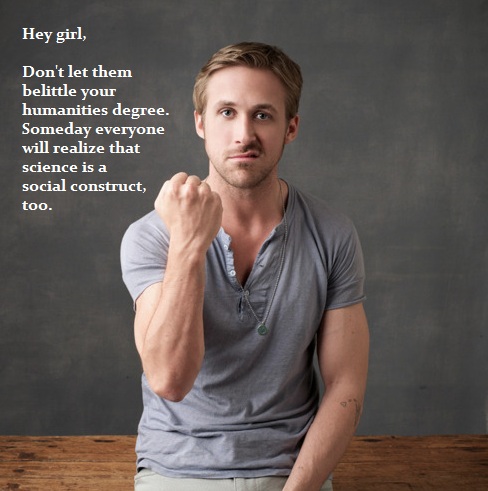

Hi Hon 😊 Your sexist email doesn't perturb me. As I mentioned I am interdisciplinary scholar having worked in science and medical fields where I am used to such silly banter. You just humiliated yourself in front of the whole email list. Fiona On Mon., 12 Jun. 2017 at 8:40 pm, Giancarlo M. Sandoval < gsmicro.nics@gmail.com> wrote:
See attached.
Cheers.
On 12 Jun 2017 11:27, "Tof Eklund" <tof.eklund@aut.ac.nz> wrote:
Really, I think this is the final word on the subject: http://bit.ly/4kb77v
Best, Tof Eklund English and New Media Studies Auckland University of Technology
On Jun 12, 2017, at 8:54 PM, Taylor-Smith, Ella < E.Taylor-Smith@napier.ac.uk<mailto:E.Taylor-Smith@napier.ac.uk>> wrote:
Hi all
If we are interested in studying what people are doing on the Internet (what they think they're doing etc.), then we can't ignore that people share images -especially images with words in -that they call memes. The books coming out of the Why We Post project take this line and are rewarded with all sorts of insights about the contemporary use of memes in various cultures. E.g. https://www.ucl.ac.uk/why-we- post/discoveries/14-memes-have-become-the-moral-police-of-online-life
Miller and Sinanan's book about Facebook use is a good place to start Miller, D. & Sinanan, J. (2017). Visualising Facebook. London: UCL Press. http://www.ucl.ac.uk/ucl-press/browse-books/visualising-facebook
If we're interested in the relationship between Dawkins' ideas and the concept of an internet meme, I have a couple of pointers that might help. It seems to be that media scholars use the term meme to study how content spreads across the Internet, by focusing on the content of the content -virality, while virality is a metaphor -people do the spreading, not the content.
For Dawkins (in the meme) "the idea of purpose is only a metaphor" (The Selfish Gene).
When Godwin introduced the Internet meme idea, he seemed to be taking this concept of virality in order to introduce a counter-meme (Godwin's Law of Nazi Analogies). In this case, the meme's purpose is Godwin's purpose. https://www.wired.com/1994/10/godwin-if-2/
Many definitions of meme emphasise humour e.g. “a piece of culture, typically a joke, which gains influence through online transmission.” Davison, P. (2012). The Language of Internet Memes. In M. Mandiberg (ed.), The Social Media Reader (pp. 120–34), New York: New York University Press
If we lose our sense of humour while studying or discussing memes, we will not be able to understand them at all. Probably best not to underestimate the role of humour in any communications, but especially online.
Hope this helps.
-Ella
Dr Ella Taylor-Smith
School of Computing Edinburgh Napier University 10 Colinton Road Edinburgh, EH10 5DT
Email: e.taylor-smith@napier.ac.uk<mailto:e.taylor-smith@napier.ac.uk>
http://www.iidi.napier.ac.uk/e.taylor-smith http://about.me/EllaTaylorSmith @EllaTasm
This message and its attachment(s) are intended for the addressee(s) only and should not be read, copied, disclosed, forwarded or relied upon by any person other than the intended addressee(s) without the permission of the sender. If you are not the intended addressee you must not take any action based on this message and its attachment(s) nor must you copy or show them to anyone. Please respond to the sender and ensure that this message and its attachment(s) are deleted.
It is your responsibility to ensure that this message and its attachment(s) are scanned for viruses or other defects. Edinburgh Napier University does not accept liability for any loss or damage which may result from this message or its attachment(s), or for errors or omissions arising after it was sent. Email is not a secure medium. Emails entering Edinburgh Napier University's system are subject to routine monitoring and filtering by Edinburgh Napier University.
Edinburgh Napier University is a registered Scottish charity. Registration number SC018373
_______________________________________________ The Air-L@listserv.aoir.org<mailto:Air-L@listserv.aoir.org> mailing list is provided by the Association of Internet Researchers http://aoir.org Subscribe, change options or unsubscribe at: http://listserv.aoir.org/ listinfo.cgi/air-l-aoir.org
Join the Association of Internet Researchers: http://www.aoir.org/ _______________________________________________ The Air-L@listserv.aoir.org mailing list is provided by the Association of Internet Researchers http://aoir.org Subscribe, change options or unsubscribe at: http://listserv.aoir.org/ listinfo.cgi/air-l-aoir.org
Join the Association of Internet Researchers: http://www.aoir.org/
The Air-L@listserv.aoir.org mailing list is provided by the Association of Internet Researchers http://aoir.org Subscribe, change options or unsubscribe at: http://listserv.aoir.org/listinfo.cgi/air-l-aoir.org
Join the Association of Internet Researchers: http://www.aoir.org/

As the images posted to this list for the LOLs illustrate, these issues are very well rehearsed among vernacular experts. But they are very well rehearsed among scholars of internet culture as well. I second the recommendation to read Limor Shifman’s book on the subject, and if nobody else posted it, see also the Culture Digitally Festival of Memeology, which features many of the leading meme scholars http://culturedigitally.org/festival-of-memeology/ The “festival” includes “Memeology Festival 05. Memes as Ritual, Virals as Transmission? In Praise of Blurry Boundaries” also by Limor Shifman, which is a very short piece that covers many of these questions. http://culturedigitally.org/2015/11/memeology-festival-05-memes-as-ritual-vi... On 12/6/17, 6:47 pm, "Air-L on behalf of Taylor-Smith, Ella" <air-l-bounces@listserv.aoir.org on behalf of E.Taylor-Smith@napier.ac.uk> wrote: Hi all If we are interested in studying what people are doing on the Internet (what they think they're doing etc.), then we can't ignore that people share images -especially images with words in -that they call memes. The books coming out of the Why We Post project take this line and are rewarded with all sorts of insights about the contemporary use of memes in various cultures. E.g. https://www.ucl.ac.uk/why-we-post/discoveries/14-memes-have-become-the-moral... Miller and Sinanan's book about Facebook use is a good place to start Miller, D. & Sinanan, J. (2017). Visualising Facebook. London: UCL Press. http://www.ucl.ac.uk/ucl-press/browse-books/visualising-facebook If we're interested in the relationship between Dawkins' ideas and the concept of an internet meme, I have a couple of pointers that might help. It seems to be that media scholars use the term meme to study how content spreads across the Internet, by focusing on the content of the content -virality, while virality is a metaphor -people do the spreading, not the content. For Dawkins (in the meme) "the idea of purpose is only a metaphor" (The Selfish Gene). When Godwin introduced the Internet meme idea, he seemed to be taking this concept of virality in order to introduce a counter-meme (Godwin's Law of Nazi Analogies). In this case, the meme's purpose is Godwin's purpose. https://www.wired.com/1994/10/godwin-if-2/ Many definitions of meme emphasise humour e.g. “a piece of culture, typically a joke, which gains influence through online transmission.” Davison, P. (2012). The Language of Internet Memes. In M. Mandiberg (ed.), The Social Media Reader (pp. 120–34), New York: New York University Press If we lose our sense of humour while studying or discussing memes, we will not be able to understand them at all. Probably best not to underestimate the role of humour in any communications, but especially online. Hope this helps. -Ella Dr Ella Taylor-Smith School of Computing Edinburgh Napier University 10 Colinton Road Edinburgh, EH10 5DT Email: e.taylor-smith@napier.ac.uk http://www.iidi.napier.ac.uk/e.taylor-smith http://about.me/EllaTaylorSmith @EllaTasm This message and its attachment(s) are intended for the addressee(s) only and should not be read, copied, disclosed, forwarded or relied upon by any person other than the intended addressee(s) without the permission of the sender. If you are not the intended addressee you must not take any action based on this message and its attachment(s) nor must you copy or show them to anyone. Please respond to the sender and ensure that this message and its attachment(s) are deleted. It is your responsibility to ensure that this message and its attachment(s) are scanned for viruses or other defects. Edinburgh Napier University does not accept liability for any loss or damage which may result from this message or its attachment(s), or for errors or omissions arising after it was sent. Email is not a secure medium. Emails entering Edinburgh Napier University's system are subject to routine monitoring and filtering by Edinburgh Napier University. Edinburgh Napier University is a registered Scottish charity. Registration number SC018373 _______________________________________________ The Air-L@listserv.aoir.org mailing list is provided by the Association of Internet Researchers http://aoir.org Subscribe, change options or unsubscribe at: http://listserv.aoir.org/listinfo.cgi/air-l-aoir.org Join the Association of Internet Researchers: http://www.aoir.org/
re; Meme tracking. I am an inter-diciplinary digital visual culture scholar and I submitted my thesis a few weeks back focusing on digital memes and selfies(UTS, Sydney; 'The semeful sociability of digital memes'). I am interested in visual social interaction and communication in social media. In my thesis I relied heavily on Shiftman's work to investigate memes as what might be described a form of vernacular creativity (Burgess). I think this thread was originally about tracking digital memes so I want to go back to that. Milners( Supervised by Baym) thesis might be of interest when considering tracking as he investigated memes across a number of platforms. Many scholars have thought for a while that vernacular is based in the platform that the activity takes place. In my thesis I focused on the concept of digital meme communities in the context of evolved place and space in online contexts. ( my idea of community is the one Fish talks about) Shifman highlights that digital memes are always groups of content. So I guess what I am getting at is that you are considering tracking the movement of memes through online spaces then I think it would be essential to track groups and spreadability in some way rather then tracking a meme because the conversation is essentially part of the community the memes and to remove a meme from its context then also changes the meaning. Hope that is of some help when thinking about tracking digital memes. Fiona Fiona Andreallo Lecturer USYD On Tue, Jun 13, 2017 at 9:00 AM, Jean Burgess <je.burgess@qut.edu.au> wrote:
As the images posted to this list for the LOLs illustrate, these issues are very well rehearsed among vernacular experts. But they are very well rehearsed among scholars of internet culture as well.
I second the recommendation to read Limor Shifman’s book on the subject, and if nobody else posted it, see also the Culture Digitally Festival of Memeology, which features many of the leading meme scholars http://culturedigitally.org/festival-of-memeology/
The “festival” includes “Memeology Festival 05. Memes as Ritual, Virals as Transmission? In Praise of Blurry Boundaries” also by Limor Shifman, which is a very short piece that covers many of these questions. http://culturedigitally.org/2015/11/memeology-festival-05- memes-as-ritual-virals-as-transmission-in-praise-of-blurry-boundaries/
On 12/6/17, 6:47 pm, "Air-L on behalf of Taylor-Smith, Ella" < air-l-bounces@listserv.aoir.org on behalf of E.Taylor-Smith@napier.ac.uk> wrote:
Hi all
If we are interested in studying what people are doing on the Internet (what they think they're doing etc.), then we can't ignore that people share images -especially images with words in -that they call memes. The books coming out of the Why We Post project take this line and are rewarded with all sorts of insights about the contemporary use of memes in various cultures. E.g. https://www.ucl.ac.uk/why-we- post/discoveries/14-memes-have-become-the-moral-police-of-online-life
Miller and Sinanan's book about Facebook use is a good place to start Miller, D. & Sinanan, J. (2017). Visualising Facebook. London: UCL Press. http://www.ucl.ac.uk/ucl-press/browse-books/visualising-facebook
If we're interested in the relationship between Dawkins' ideas and the concept of an internet meme, I have a couple of pointers that might help. It seems to be that media scholars use the term meme to study how content spreads across the Internet, by focusing on the content of the content -virality, while virality is a metaphor -people do the spreading, not the content.
For Dawkins (in the meme) "the idea of purpose is only a metaphor" (The Selfish Gene).
When Godwin introduced the Internet meme idea, he seemed to be taking this concept of virality in order to introduce a counter-meme (Godwin's Law of Nazi Analogies). In this case, the meme's purpose is Godwin's purpose. https://www.wired.com/1994/10/godwin-if-2/
Many definitions of meme emphasise humour e.g. “a piece of culture, typically a joke, which gains influence through online transmission.” Davison, P. (2012). The Language of Internet Memes. In M. Mandiberg (ed.), The Social Media Reader (pp. 120–34), New York: New York University Press
If we lose our sense of humour while studying or discussing memes, we will not be able to understand them at all. Probably best not to underestimate the role of humour in any communications, but especially online.
Hope this helps.
-Ella
Dr Ella Taylor-Smith
School of Computing Edinburgh Napier University 10 Colinton Road Edinburgh, EH10 5DT
Email: e.taylor-smith@napier.ac.uk
http://www.iidi.napier.ac.uk/e.taylor-smith http://about.me/EllaTaylorSmith @EllaTasm
This message and its attachment(s) are intended for the addressee(s) only and should not be read, copied, disclosed, forwarded or relied upon by any person other than the intended addressee(s) without the permission of the sender. If you are not the intended addressee you must not take any action based on this message and its attachment(s) nor must you copy or show them to anyone. Please respond to the sender and ensure that this message and its attachment(s) are deleted.
It is your responsibility to ensure that this message and its attachment(s) are scanned for viruses or other defects. Edinburgh Napier University does not accept liability for any loss or damage which may result from this message or its attachment(s), or for errors or omissions arising after it was sent. Email is not a secure medium. Emails entering Edinburgh Napier University's system are subject to routine monitoring and filtering by Edinburgh Napier University.
Edinburgh Napier University is a registered Scottish charity. Registration number SC018373
_______________________________________________ The Air-L@listserv.aoir.org mailing list is provided by the Association of Internet Researchers http://aoir.org Subscribe, change options or unsubscribe at: http://listserv.aoir.org/ listinfo.cgi/air-l-aoir.org
Join the Association of Internet Researchers: http://www.aoir.org/
_______________________________________________ The Air-L@listserv.aoir.org mailing list is provided by the Association of Internet Researchers http://aoir.org Subscribe, change options or unsubscribe at: http://listserv.aoir.org/ listinfo.cgi/air-l-aoir.org
Join the Association of Internet Researchers: http://www.aoir.org/

*"My idea of community is the one FIsh talks about..."* Fish? Please clarify the reference. Thank you, Thomas Ball On Mon, Jun 12, 2017 at 11:20 PM, fiona andf <fiona.andreallo@gmail.com> wrote:
re; Meme tracking. I am an inter-diciplinary digital visual culture scholar and I submitted my thesis a few weeks back focusing on digital memes and selfies(UTS, Sydney; 'The semeful sociability of digital memes'). I am interested in visual social interaction and communication in social media. In my thesis I relied heavily on Shiftman's work to investigate memes as what might be described a form of vernacular creativity (Burgess).
I think this thread was originally about tracking digital memes so I want to go back to that. Milners( Supervised by Baym) thesis might be of interest when considering tracking as he investigated memes across a number of platforms. Many scholars have thought for a while that vernacular is based in the platform that the activity takes place. In my thesis I focused on the concept of digital meme communities in the context of evolved place and space in online contexts. ( my idea of community is the one Fish talks about)
Shifman highlights that digital memes are always groups of content. So I guess what I am getting at is that you are considering tracking the movement of memes through online spaces then I think it would be essential to track groups and spreadability in some way rather then tracking a meme because the conversation is essentially part of the community the memes and to remove a meme from its context then also changes the meaning.
Hope that is of some help when thinking about tracking digital memes.
Fiona
Fiona Andreallo Lecturer USYD
On Tue, Jun 13, 2017 at 9:00 AM, Jean Burgess <je.burgess@qut.edu.au> wrote:
As the images posted to this list for the LOLs illustrate, these issues are very well rehearsed among vernacular experts. But they are very well rehearsed among scholars of internet culture as well.
I second the recommendation to read Limor Shifman’s book on the subject, and if nobody else posted it, see also the Culture Digitally Festival of Memeology, which features many of the leading meme scholars http://culturedigitally.org/festival-of-memeology/
The “festival” includes “Memeology Festival 05. Memes as Ritual, Virals as Transmission? In Praise of Blurry Boundaries” also by Limor Shifman, which is a very short piece that covers many of these questions. http://culturedigitally.org/2015/11/memeology-festival-05- memes-as-ritual-virals-as-transmission-in-praise-of-blurry-boundaries/
On 12/6/17, 6:47 pm, "Air-L on behalf of Taylor-Smith, Ella" < air-l-bounces@listserv.aoir.org on behalf of E.Taylor-Smith@napier.ac.uk
wrote:
Hi all
If we are interested in studying what people are doing on the Internet (what they think they're doing etc.), then we can't ignore that people share images -especially images with words in -that they call memes. The books coming out of the Why We Post project take this line and are rewarded with all sorts of insights about the contemporary use of memes in various cultures. E.g. https://www.ucl.ac.uk/why-we- post/discoveries/14-memes-have-become-the-moral-police-of-online-life
Miller and Sinanan's book about Facebook use is a good place to start Miller, D. & Sinanan, J. (2017). Visualising Facebook. London: UCL Press. http://www.ucl.ac.uk/ucl-press/browse-books/visualising-facebook
If we're interested in the relationship between Dawkins' ideas and the concept of an internet meme, I have a couple of pointers that might help. It seems to be that media scholars use the term meme to study how content spreads across the Internet, by focusing on the content of the content -virality, while virality is a metaphor -people do the spreading, not the content.
For Dawkins (in the meme) "the idea of purpose is only a metaphor" (The Selfish Gene).
When Godwin introduced the Internet meme idea, he seemed to be taking this concept of virality in order to introduce a counter-meme (Godwin's Law of Nazi Analogies). In this case, the meme's purpose is Godwin's purpose. https://www.wired.com/1994/10/godwin-if-2/
Many definitions of meme emphasise humour e.g. “a piece of culture, typically a joke, which gains influence through online transmission.” Davison, P. (2012). The Language of Internet Memes. In M. Mandiberg (ed.), The Social Media Reader (pp. 120–34), New York: New York University Press
If we lose our sense of humour while studying or discussing memes, we will not be able to understand them at all. Probably best not to underestimate the role of humour in any communications, but especially online.
Hope this helps.
-Ella
Dr Ella Taylor-Smith
School of Computing Edinburgh Napier University 10 Colinton Road Edinburgh, EH10 5DT
Email: e.taylor-smith@napier.ac.uk
http://www.iidi.napier.ac.uk/e.taylor-smith http://about.me/EllaTaylorSmith @EllaTasm
This message and its attachment(s) are intended for the addressee(s) only and should not be read, copied, disclosed, forwarded or relied upon by any person other than the intended addressee(s) without the permission of the sender. If you are not the intended addressee you must not take any action based on this message and its attachment(s) nor must you copy or show them to anyone. Please respond to the sender and ensure that this message and its attachment(s) are deleted.
It is your responsibility to ensure that this message and its attachment(s) are scanned for viruses or other defects. Edinburgh Napier University does not accept liability for any loss or damage which may result from this message or its attachment(s), or for errors or omissions arising after it was sent. Email is not a secure medium. Emails entering Edinburgh Napier University's system are subject to routine monitoring and filtering by Edinburgh Napier University.
Edinburgh Napier University is a registered Scottish charity. Registration number SC018373
_______________________________________________ The Air-L@listserv.aoir.org mailing list is provided by the Association of Internet Researchers http://aoir.org Subscribe, change options or unsubscribe at: http://listserv.aoir.org/ listinfo.cgi/air-l-aoir.org
Join the Association of Internet Researchers: http://www.aoir.org/
_______________________________________________ The Air-L@listserv.aoir.org mailing list is provided by the Association of Internet Researchers http://aoir.org Subscribe, change options or unsubscribe at: http://listserv.aoir.org/ listinfo.cgi/air-l-aoir.org
Join the Association of Internet Researchers: http://www.aoir.org/
The Air-L@listserv.aoir.org mailing list is provided by the Association of Internet Researchers http://aoir.org Subscribe, change options or unsubscribe at: http://listserv.aoir.org/ listinfo.cgi/air-l-aoir.org
Join the Association of Internet Researchers: http://www.aoir.org/
On Tue., 13 Jun. 2017 at 8:48 pm, Thomas Ball <xtc283@gmail.com> wrote:
*"My idea of community is the one FIsh talks about..."*
Fish? Please clarify the reference.
Thank you, Thomas Ball
On Mon, Jun 12, 2017 at 11:20 PM, fiona andf <fiona.andreallo@gmail.com> wrote:
re; Meme tracking. I am an inter-diciplinary digital visual culture scholar and I submitted my thesis a few weeks back focusing on digital memes and selfies(UTS, Sydney; 'The semeful sociability of digital memes'). I am interested in visual social interaction and communication in social media. In my thesis I relied heavily on Shiftman's work to investigate memes as what might be described a form of vernacular creativity (Burgess).
I think this thread was originally about tracking digital memes so I want to go back to that. Milners( Supervised by Baym) thesis might be of interest when considering tracking as he investigated memes across a number of platforms. Many scholars have thought for a while that vernacular is based in the platform that the activity takes place. In my thesis I focused on the concept of digital meme communities in the context of evolved place and space in online contexts. ( my idea of community is the one Fish talks about)
Shifman highlights that digital memes are always groups of content. So I guess what I am getting at is that you are considering tracking the movement of memes through online spaces then I think it would be essential to track groups and spreadability in some way rather then tracking a meme because the conversation is essentially part of the community the memes and to remove a meme from its context then also changes the meaning.
Hope that is of some help when thinking about tracking digital memes.
Fiona
Fiona Andreallo Lecturer USYD
On Tue, Jun 13, 2017 at 9:00 AM, Jean Burgess <je.burgess@qut.edu.au> wrote:
As the images posted to this list for the LOLs illustrate, these issues are very well rehearsed among vernacular experts. But they are very well rehearsed among scholars of internet culture as well.
I second the recommendation to read Limor Shifman’s book on the subject, and if nobody else posted it, see also the Culture Digitally Festival of Memeology, which features many of the leading meme scholars http://culturedigitally.org/festival-of-memeology/
The “festival” includes “Memeology Festival 05. Memes as Ritual, Virals as Transmission? In Praise of Blurry Boundaries” also by Limor Shifman, which is a very short piece that covers many of these questions. http://culturedigitally.org/2015/11/memeology-festival-05- memes-as-ritual-virals-as-transmission-in-praise-of-blurry-boundaries/
On 12/6/17, 6:47 pm, "Air-L on behalf of Taylor-Smith, Ella" < air-l-bounces@listserv.aoir.org on behalf of E.Taylor-Smith@napier.ac.uk> wrote:
Hi all
If we are interested in studying what people are doing on the Internet (what they think they're doing etc.), then we can't ignore that people share images -especially images with words in -that they call memes. The books coming out of the Why We Post project take this line and are rewarded with all sorts of insights about the contemporary use of memes in various cultures. E.g. https://www.ucl.ac.uk/why-we- post/discoveries/14-memes-have-become-the-moral-police-of-online-life
Miller and Sinanan's book about Facebook use is a good place to start Miller, D. & Sinanan, J. (2017). Visualising Facebook. London: UCL Press. http://www.ucl.ac.uk/ucl-press/browse-books/visualising-facebook
If we're interested in the relationship between Dawkins' ideas and the concept of an internet meme, I have a couple of pointers that might help. It seems to be that media scholars use the term meme to study how content spreads across the Internet, by focusing on the content of the content -virality, while virality is a metaphor -people do the spreading, not the content.
For Dawkins (in the meme) "the idea of purpose is only a metaphor" (The Selfish Gene).
When Godwin introduced the Internet meme idea, he seemed to be taking this concept of virality in order to introduce a counter-meme (Godwin's Law of Nazi Analogies). In this case, the meme's purpose is Godwin's purpose. https://www.wired.com/1994/10/godwin-if-2/
Many definitions of meme emphasise humour e.g. “a piece of culture, typically a joke, which gains influence through online transmission.” Davison, P. (2012). The Language of Internet Memes. In M. Mandiberg (ed.), The Social Media Reader (pp. 120–34), New York: New York University Press
If we lose our sense of humour while studying or discussing memes, we will not be able to understand them at all. Probably best not to underestimate the role of humour in any communications, but especially online.
Hope this helps.
-Ella
Dr Ella Taylor-Smith
School of Computing Edinburgh Napier University 10 Colinton Road Edinburgh, EH10 5DT
Email: e.taylor-smith@napier.ac.uk
http://www.iidi.napier.ac.uk/e.taylor-smith http://about.me/EllaTaylorSmith @EllaTasm
This message and its attachment(s) are intended for the addressee(s) only and should not be read, copied, disclosed, forwarded or relied upon by any person other than the intended addressee(s) without the permission of the sender. If you are not the intended addressee you must not take any action based on this message and its attachment(s) nor must you copy or show them to anyone. Please respond to the sender and ensure that this message and its attachment(s) are deleted.
It is your responsibility to ensure that this message and its attachment(s) are scanned for viruses or other defects. Edinburgh Napier University does not accept liability for any loss or damage which may result from this message or its attachment(s), or for errors or omissions arising after it was sent. Email is not a secure medium. Emails entering Edinburgh Napier University's system are subject to routine monitoring and filtering by Edinburgh Napier University.
Edinburgh Napier University is a registered Scottish charity. Registration number SC018373
_______________________________________________ The Air-L@listserv.aoir.org mailing list is provided by the Association of Internet Researchers http://aoir.org Subscribe, change options or unsubscribe at: http://listserv.aoir.org/ listinfo.cgi/air-l-aoir.org
Join the Association of Internet Researchers: http://www.aoir.org/
_______________________________________________ The Air-L@listserv.aoir.org mailing list is provided by the Association of Internet Researchers http://aoir.org Subscribe, change options or unsubscribe at: http://listserv.aoir.org/ listinfo.cgi/air-l-aoir.org
Join the Association of Internet Researchers: http://www.aoir.org/
The Air-L@listserv.aoir.org mailing list is provided by the Association of Internet Researchers http://aoir.org Subscribe, change options or unsubscribe at: http://listserv.aoir.org/listinfo.cgi/air-l-aoir.org
Join the Association of Internet Researchers: http://www.aoir.org/
Ok Thomas will can send you some references for Fish tomorrow. It's too late for me now. More than that you'll have to wait to Look at my thesis ;) My Phd supervisor is Prof. Theo Van Leeuwen and he also talks about community in ref to Fish. You might be familiar with his work ? Will send you an email Tomorrow. Fiona Fiona Andreallo Lecturer, USYD On Tue., 13 Jun. 2017 at 9:49 pm, fiona andf <fiona.andreallo@gmail.com> wrote:
On Tue., 13 Jun. 2017 at 8:48 pm, Thomas Ball <xtc283@gmail.com> wrote:
*"My idea of community is the one FIsh talks about..."*
Fish? Please clarify the reference.
Thank you, Thomas Ball
On Mon, Jun 12, 2017 at 11:20 PM, fiona andf <fiona.andreallo@gmail.com> wrote:
re; Meme tracking. I am an inter-diciplinary digital visual culture scholar and I submitted my thesis a few weeks back focusing on digital memes and selfies(UTS, Sydney; 'The semeful sociability of digital memes'). I am interested in visual social interaction and communication in social media. In my thesis I relied heavily on Shiftman's work to investigate memes as what might be described a form of vernacular creativity (Burgess).
I think this thread was originally about tracking digital memes so I want to go back to that. Milners( Supervised by Baym) thesis might be of interest when considering tracking as he investigated memes across a number of platforms. Many scholars have thought for a while that vernacular is based in the platform that the activity takes place. In my thesis I focused on the concept of digital meme communities in the context of evolved place and space in online contexts. ( my idea of community is the one Fish talks about)
Shifman highlights that digital memes are always groups of content. So I guess what I am getting at is that you are considering tracking the movement of memes through online spaces then I think it would be essential to track groups and spreadability in some way rather then tracking a meme because the conversation is essentially part of the community the memes and to remove a meme from its context then also changes the meaning.
Hope that is of some help when thinking about tracking digital memes.
Fiona
Fiona Andreallo Lecturer USYD
On Tue, Jun 13, 2017 at 9:00 AM, Jean Burgess <je.burgess@qut.edu.au> wrote:
As the images posted to this list for the LOLs illustrate, these issues are very well rehearsed among vernacular experts. But they are very well rehearsed among scholars of internet culture as well.
I second the recommendation to read Limor Shifman’s book on the subject, and if nobody else posted it, see also the Culture Digitally Festival of Memeology, which features many of the leading meme scholars http://culturedigitally.org/festival-of-memeology/
The “festival” includes “Memeology Festival 05. Memes as Ritual, Virals as Transmission? In Praise of Blurry Boundaries” also by Limor Shifman, which is a very short piece that covers many of these questions. http://culturedigitally.org/2015/11/memeology-festival-05- memes-as-ritual-virals-as-transmission-in-praise-of-blurry-boundaries/
On 12/6/17, 6:47 pm, "Air-L on behalf of Taylor-Smith, Ella" < air-l-bounces@listserv.aoir.org on behalf of E.Taylor-Smith@napier.ac.uk> wrote:
Hi all
If we are interested in studying what people are doing on the Internet (what they think they're doing etc.), then we can't ignore that people share images -especially images with words in -that they call memes. The books coming out of the Why We Post project take this line and are rewarded with all sorts of insights about the contemporary use of memes in various cultures. E.g. https://www.ucl.ac.uk/why-we- post/discoveries/14-memes-have-become-the-moral-police-of-online-life
Miller and Sinanan's book about Facebook use is a good place to start Miller, D. & Sinanan, J. (2017). Visualising Facebook. London: UCL Press. http://www.ucl.ac.uk/ucl-press/browse-books/visualising-facebook
If we're interested in the relationship between Dawkins' ideas and the concept of an internet meme, I have a couple of pointers that might help. It seems to be that media scholars use the term meme to study how content spreads across the Internet, by focusing on the content of the content -virality, while virality is a metaphor -people do the spreading, not the content.
For Dawkins (in the meme) "the idea of purpose is only a metaphor" (The Selfish Gene).
When Godwin introduced the Internet meme idea, he seemed to be taking this concept of virality in order to introduce a counter-meme (Godwin's Law of Nazi Analogies). In this case, the meme's purpose is Godwin's purpose. https://www.wired.com/1994/10/godwin-if-2/
Many definitions of meme emphasise humour e.g. “a piece of culture, typically a joke, which gains influence through online transmission.” Davison, P. (2012). The Language of Internet Memes. In M. Mandiberg (ed.), The Social Media Reader (pp. 120–34), New York: New York University Press
If we lose our sense of humour while studying or discussing memes, we will not be able to understand them at all. Probably best not to underestimate the role of humour in any communications, but especially online.
Hope this helps.
-Ella
Dr Ella Taylor-Smith
School of Computing Edinburgh Napier University 10 Colinton Road Edinburgh, EH10 5DT
Email: e.taylor-smith@napier.ac.uk
http://www.iidi.napier.ac.uk/e.taylor-smith http://about.me/EllaTaylorSmith @EllaTasm
This message and its attachment(s) are intended for the addressee(s) only and should not be read, copied, disclosed, forwarded or relied upon by any person other than the intended addressee(s) without the permission of the sender. If you are not the intended addressee you must not take any action based on this message and its attachment(s) nor must you copy or show them to anyone. Please respond to the sender and ensure that this message and its attachment(s) are deleted.
It is your responsibility to ensure that this message and its attachment(s) are scanned for viruses or other defects. Edinburgh Napier University does not accept liability for any loss or damage which may result from this message or its attachment(s), or for errors or omissions arising after it was sent. Email is not a secure medium. Emails entering Edinburgh Napier University's system are subject to routine monitoring and filtering by Edinburgh Napier University.
Edinburgh Napier University is a registered Scottish charity. Registration number SC018373
_______________________________________________ The Air-L@listserv.aoir.org mailing list is provided by the Association of Internet Researchers http://aoir.org Subscribe, change options or unsubscribe at: http://listserv.aoir.org/ listinfo.cgi/air-l-aoir.org
Join the Association of Internet Researchers: http://www.aoir.org/
_______________________________________________ The Air-L@listserv.aoir.org mailing list is provided by the Association of Internet Researchers http://aoir.org Subscribe, change options or unsubscribe at: http://listserv.aoir.org/ listinfo.cgi/air-l-aoir.org
Join the Association of Internet Researchers: http://www.aoir.org/
The Air-L@listserv.aoir.org mailing list is provided by the Association of Internet Researchers http://aoir.org Subscribe, change options or unsubscribe at: http://listserv.aoir.org/listinfo.cgi/air-l-aoir.org
Join the Association of Internet Researchers: http://www.aoir.org/

The Library of Congress just announced the release of the Web Cultures Web Archive Collection <https://loc.gov/collections/web-cultures-web-archive/?loclr=blogloc>, a representative sampling of websites documenting the creation and sharing of emergent cultural traditions on the web. A New Collection Documents Web Culture: Remix, Slang and Memes https://blogs.loc.gov/loc/2017/06/remix-slang-and-memes-a-new-collection-doc... <https://blogs.loc.gov/loc/2017/06/remix-slang-and-memes-a-new-collection-documents-web-culture/> Kind regards, Erwin
On 13 Jun 2017, at 13:54, fiona andf <fiona.andreallo@gmail.com> wrote:
Ok Thomas will can send you some references for Fish tomorrow. It's too late for me now. More than that you'll have to wait to Look at my thesis ;) My Phd supervisor is Prof. Theo Van Leeuwen and he also talks about community in ref to Fish. You might be familiar with his work ? Will send you an email Tomorrow. Fiona Fiona Andreallo Lecturer, USYD
On Tue., 13 Jun. 2017 at 9:49 pm, fiona andf <fiona.andreallo@gmail.com> wrote:
On Tue., 13 Jun. 2017 at 8:48 pm, Thomas Ball <xtc283@gmail.com> wrote:
*"My idea of community is the one FIsh talks about..."*
Fish? Please clarify the reference.
Thank you, Thomas Ball
On Mon, Jun 12, 2017 at 11:20 PM, fiona andf <fiona.andreallo@gmail.com> wrote:
re; Meme tracking. I am an inter-diciplinary digital visual culture scholar and I submitted my thesis a few weeks back focusing on digital memes and selfies(UTS, Sydney; 'The semeful sociability of digital memes'). I am interested in visual social interaction and communication in social media. In my thesis I relied heavily on Shiftman's work to investigate memes as what might be described a form of vernacular creativity (Burgess).
I think this thread was originally about tracking digital memes so I want to go back to that. Milners( Supervised by Baym) thesis might be of interest when considering tracking as he investigated memes across a number of platforms. Many scholars have thought for a while that vernacular is based in the platform that the activity takes place. In my thesis I focused on the concept of digital meme communities in the context of evolved place and space in online contexts. ( my idea of community is the one Fish talks about)
Shifman highlights that digital memes are always groups of content. So I guess what I am getting at is that you are considering tracking the movement of memes through online spaces then I think it would be essential to track groups and spreadability in some way rather then tracking a meme because the conversation is essentially part of the community the memes and to remove a meme from its context then also changes the meaning.
Hope that is of some help when thinking about tracking digital memes.
Fiona
Fiona Andreallo Lecturer USYD
On Tue, Jun 13, 2017 at 9:00 AM, Jean Burgess <je.burgess@qut.edu.au> wrote:
As the images posted to this list for the LOLs illustrate, these issues are very well rehearsed among vernacular experts. But they are very well rehearsed among scholars of internet culture as well.
I second the recommendation to read Limor Shifman’s book on the subject, and if nobody else posted it, see also the Culture Digitally Festival of Memeology, which features many of the leading meme scholars http://culturedigitally.org/festival-of-memeology/
The “festival” includes “Memeology Festival 05. Memes as Ritual, Virals as Transmission? In Praise of Blurry Boundaries” also by Limor Shifman, which is a very short piece that covers many of these questions. http://culturedigitally.org/2015/11/memeology-festival-05- memes-as-ritual-virals-as-transmission-in-praise-of-blurry-boundaries/
On 12/6/17, 6:47 pm, "Air-L on behalf of Taylor-Smith, Ella" < air-l-bounces@listserv.aoir.org on behalf of E.Taylor-Smith@napier.ac.uk> wrote:
Hi all
If we are interested in studying what people are doing on the Internet (what they think they're doing etc.), then we can't ignore that people share images -especially images with words in -that they call memes. The books coming out of the Why We Post project take this line and are rewarded with all sorts of insights about the contemporary use of memes in various cultures. E.g. https://www.ucl.ac.uk/why-we- post/discoveries/14-memes-have-become-the-moral-police-of-online-life
Miller and Sinanan's book about Facebook use is a good place to start Miller, D. & Sinanan, J. (2017). Visualising Facebook. London: UCL Press. http://www.ucl.ac.uk/ucl-press/browse-books/visualising-facebook
If we're interested in the relationship between Dawkins' ideas and the concept of an internet meme, I have a couple of pointers that might help. It seems to be that media scholars use the term meme to study how content spreads across the Internet, by focusing on the content of the content -virality, while virality is a metaphor -people do the spreading, not the content.
For Dawkins (in the meme) "the idea of purpose is only a metaphor" (The Selfish Gene).
When Godwin introduced the Internet meme idea, he seemed to be taking this concept of virality in order to introduce a counter-meme (Godwin's Law of Nazi Analogies). In this case, the meme's purpose is Godwin's purpose. https://www.wired.com/1994/10/godwin-if-2/
Many definitions of meme emphasise humour e.g. “a piece of culture, typically a joke, which gains influence through online transmission.” Davison, P. (2012). The Language of Internet Memes. In M. Mandiberg (ed.), The Social Media Reader (pp. 120–34), New York: New York University Press
If we lose our sense of humour while studying or discussing memes, we will not be able to understand them at all. Probably best not to underestimate the role of humour in any communications, but especially online.
Hope this helps.
-Ella
Dr Ella Taylor-Smith
School of Computing Edinburgh Napier University 10 Colinton Road Edinburgh, EH10 5DT
Email: e.taylor-smith@napier.ac.uk
http://www.iidi.napier.ac.uk/e.taylor-smith http://about.me/EllaTaylorSmith @EllaTasm
This message and its attachment(s) are intended for the addressee(s) only and should not be read, copied, disclosed, forwarded or relied upon by any person other than the intended addressee(s) without the permission of the sender. If you are not the intended addressee you must not take any action based on this message and its attachment(s) nor must you copy or show them to anyone. Please respond to the sender and ensure that this message and its attachment(s) are deleted.
It is your responsibility to ensure that this message and its attachment(s) are scanned for viruses or other defects. Edinburgh Napier University does not accept liability for any loss or damage which may result from this message or its attachment(s), or for errors or omissions arising after it was sent. Email is not a secure medium. Emails entering Edinburgh Napier University's system are subject to routine monitoring and filtering by Edinburgh Napier University.
Edinburgh Napier University is a registered Scottish charity. Registration number SC018373
_______________________________________________ The Air-L@listserv.aoir.org mailing list is provided by the Association of Internet Researchers http://aoir.org Subscribe, change options or unsubscribe at: http://listserv.aoir.org/ listinfo.cgi/air-l-aoir.org
Join the Association of Internet Researchers: http://www.aoir.org/
_______________________________________________ The Air-L@listserv.aoir.org mailing list is provided by the Association of Internet Researchers http://aoir.org Subscribe, change options or unsubscribe at: http://listserv.aoir.org/ listinfo.cgi/air-l-aoir.org
Join the Association of Internet Researchers: http://www.aoir.org/
The Air-L@listserv.aoir.org mailing list is provided by the Association of Internet Researchers http://aoir.org Subscribe, change options or unsubscribe at: http://listserv.aoir.org/listinfo.cgi/air-l-aoir.org
Join the Association of Internet Researchers: http://www.aoir.org/
_______________________________________________ The Air-L@listserv.aoir.org mailing list is provided by the Association of Internet Researchers http://aoir.org Subscribe, change options or unsubscribe at: http://listserv.aoir.org/listinfo.cgi/air-l-aoir.org
Join the Association of Internet Researchers: http://www.aoir.org/
Erwin Verbruggen Project lead R&D T +31 35 677 16 91 | M +31 6 153 603 71 Skype: erwinverbruggen Netherlands Institute for Sound and Vision Media Parkboulevard 1, 1217 WE Hilversum | Postbus 1060, 1200 BB Hilversum | beeldengeluid.nl <http://www.beeldengeluid.nl/>

Hey everybody, regarding the meme metaphor I suggest looking into the first chapter of Jenkins et al. Spreadability and his critique of virality. Most of the argument ist also here: http://henryjenkins.org/blog/2014/02/a-meme-is-a-terrible-thing-to-waste-an-... Also a hint for german speaking scholars: We are establishing an interdisciplinary network of people researching memes. We had a workshop going and are publishing a special issue on the matter of memes between ‚originality and virality‘ this fall: https://memestudies.wordpress.com/ All the best! Lorenz ---------------------------------------------- New Journal Publication: Grünewald-Schukalla, L. (2017). A Methodology for Cultural Music Business Research. International Journal of Music Business Research, 6(1), 6–34. Lorenz Grünewald-Schukalla M.A. fon: +49 (0)176-578 749 13 mail: lgs@posteo.de twit: www.twitter.com/lorenzguitar ----------------------------------------------
Am 13.06.2017 um 13:54 schrieb fiona andf <fiona.andreallo@gmail.com>:
Ok Thomas will can send you some references for Fish tomorrow. It's too late for me now. More than that you'll have to wait to Look at my thesis ;) My Phd supervisor is Prof. Theo Van Leeuwen and he also talks about community in ref to Fish. You might be familiar with his work ? Will send you an email Tomorrow. Fiona Fiona Andreallo Lecturer, USYD
On Tue., 13 Jun. 2017 at 9:49 pm, fiona andf <fiona.andreallo@gmail.com> wrote:
On Tue., 13 Jun. 2017 at 8:48 pm, Thomas Ball <xtc283@gmail.com> wrote:
*"My idea of community is the one FIsh talks about..."*
Fish? Please clarify the reference.
Thank you, Thomas Ball
On Mon, Jun 12, 2017 at 11:20 PM, fiona andf <fiona.andreallo@gmail.com> wrote:
re; Meme tracking. I am an inter-diciplinary digital visual culture scholar and I submitted my thesis a few weeks back focusing on digital memes and selfies(UTS, Sydney; 'The semeful sociability of digital memes'). I am interested in visual social interaction and communication in social media. In my thesis I relied heavily on Shiftman's work to investigate memes as what might be described a form of vernacular creativity (Burgess).
I think this thread was originally about tracking digital memes so I want to go back to that. Milners( Supervised by Baym) thesis might be of interest when considering tracking as he investigated memes across a number of platforms. Many scholars have thought for a while that vernacular is based in the platform that the activity takes place. In my thesis I focused on the concept of digital meme communities in the context of evolved place and space in online contexts. ( my idea of community is the one Fish talks about)
Shifman highlights that digital memes are always groups of content. So I guess what I am getting at is that you are considering tracking the movement of memes through online spaces then I think it would be essential to track groups and spreadability in some way rather then tracking a meme because the conversation is essentially part of the community the memes and to remove a meme from its context then also changes the meaning.
Hope that is of some help when thinking about tracking digital memes.
Fiona
Fiona Andreallo Lecturer USYD
On Tue, Jun 13, 2017 at 9:00 AM, Jean Burgess <je.burgess@qut.edu.au> wrote:
As the images posted to this list for the LOLs illustrate, these issues are very well rehearsed among vernacular experts. But they are very well rehearsed among scholars of internet culture as well.
I second the recommendation to read Limor Shifman’s book on the subject, and if nobody else posted it, see also the Culture Digitally Festival of Memeology, which features many of the leading meme scholars http://culturedigitally.org/festival-of-memeology/
The “festival” includes “Memeology Festival 05. Memes as Ritual, Virals as Transmission? In Praise of Blurry Boundaries” also by Limor Shifman, which is a very short piece that covers many of these questions. http://culturedigitally.org/2015/11/memeology-festival-05- memes-as-ritual-virals-as-transmission-in-praise-of-blurry-boundaries/
On 12/6/17, 6:47 pm, "Air-L on behalf of Taylor-Smith, Ella" < air-l-bounces@listserv.aoir.org on behalf of E.Taylor-Smith@napier.ac.uk> wrote:
Hi all
If we are interested in studying what people are doing on the Internet (what they think they're doing etc.), then we can't ignore that people share images -especially images with words in -that they call memes. The books coming out of the Why We Post project take this line and are rewarded with all sorts of insights about the contemporary use of memes in various cultures. E.g. https://www.ucl.ac.uk/why-we- post/discoveries/14-memes-have-become-the-moral-police-of-online-life
Miller and Sinanan's book about Facebook use is a good place to start Miller, D. & Sinanan, J. (2017). Visualising Facebook. London: UCL Press. http://www.ucl.ac.uk/ucl-press/browse-books/visualising-facebook
If we're interested in the relationship between Dawkins' ideas and the concept of an internet meme, I have a couple of pointers that might help. It seems to be that media scholars use the term meme to study how content spreads across the Internet, by focusing on the content of the content -virality, while virality is a metaphor -people do the spreading, not the content.
For Dawkins (in the meme) "the idea of purpose is only a metaphor" (The Selfish Gene).
When Godwin introduced the Internet meme idea, he seemed to be taking this concept of virality in order to introduce a counter-meme (Godwin's Law of Nazi Analogies). In this case, the meme's purpose is Godwin's purpose. https://www.wired.com/1994/10/godwin-if-2/
Many definitions of meme emphasise humour e.g. “a piece of culture, typically a joke, which gains influence through online transmission.” Davison, P. (2012). The Language of Internet Memes. In M. Mandiberg (ed.), The Social Media Reader (pp. 120–34), New York: New York University Press
If we lose our sense of humour while studying or discussing memes, we will not be able to understand them at all. Probably best not to underestimate the role of humour in any communications, but especially online.
Hope this helps.
-Ella
Dr Ella Taylor-Smith
School of Computing Edinburgh Napier University 10 Colinton Road Edinburgh, EH10 5DT
Email: e.taylor-smith@napier.ac.uk
http://www.iidi.napier.ac.uk/e.taylor-smith http://about.me/EllaTaylorSmith @EllaTasm
This message and its attachment(s) are intended for the addressee(s) only and should not be read, copied, disclosed, forwarded or relied upon by any person other than the intended addressee(s) without the permission of the sender. If you are not the intended addressee you must not take any action based on this message and its attachment(s) nor must you copy or show them to anyone. Please respond to the sender and ensure that this message and its attachment(s) are deleted.
It is your responsibility to ensure that this message and its attachment(s) are scanned for viruses or other defects. Edinburgh Napier University does not accept liability for any loss or damage which may result from this message or its attachment(s), or for errors or omissions arising after it was sent. Email is not a secure medium. Emails entering Edinburgh Napier University's system are subject to routine monitoring and filtering by Edinburgh Napier University.
Edinburgh Napier University is a registered Scottish charity. Registration number SC018373
_______________________________________________ The Air-L@listserv.aoir.org mailing list is provided by the Association of Internet Researchers http://aoir.org Subscribe, change options or unsubscribe at: http://listserv.aoir.org/ listinfo.cgi/air-l-aoir.org
Join the Association of Internet Researchers: http://www.aoir.org/
_______________________________________________ The Air-L@listserv.aoir.org mailing list is provided by the Association of Internet Researchers http://aoir.org Subscribe, change options or unsubscribe at: http://listserv.aoir.org/ listinfo.cgi/air-l-aoir.org
Join the Association of Internet Researchers: http://www.aoir.org/
The Air-L@listserv.aoir.org mailing list is provided by the Association of Internet Researchers http://aoir.org Subscribe, change options or unsubscribe at: http://listserv.aoir.org/listinfo.cgi/air-l-aoir.org
Join the Association of Internet Researchers: http://www.aoir.org/
_______________________________________________ The Air-L@listserv.aoir.org mailing list is provided by the Association of Internet Researchers http://aoir.org Subscribe, change options or unsubscribe at: http://listserv.aoir.org/listinfo.cgi/air-l-aoir.org
Join the Association of Internet Researchers: http://www.aoir.org/
participants (8)
-
 Erwin Verbruggen
 -
 fiona andf
 -
 Giancarlo M. Sandoval
 -
 Jean Burgess
 -
 Lorenz Grünewald-Schukalla
 -
 Taylor-Smith, Ella
 -
 Thomas Ball
 -
 Tof Eklund